Before AI Delivers Value, Hospitality Needs Clarity
A trend piece about hospitality tech? Ground breaking.
We know. Everyone's publishing their "what's next" content right now. AI will fix everything. Automation is the answer. Personalisation at scale. (You've heard it all).
So why are we writing this? Because while conference speakers talk about AI, the people actually running hotels are asking a different question, "what have all these disconnected systems actually delivered for the bottom line?"
The answer? Not enough.
The ROI problem nobody's talking about
Here's what Deloitte found; profitability is the top priority for hotel executives. It’s not innovation, nor transformation, it’s profitability.
At the same time, Skift Research reports that fewer than half of hotel companies consider themselves technologically mature, with integration and system interoperability cited as the biggest barriers to ROI.
Customer Data Platforms? The reality is fewer than 10% of operators globally actually use them.
In practice, this means teams are drowning in tools yet starved of real time data insights. Guest data lives in one system, revenue in another and Marketing in a third, and so on. Nobody's looking at the same version of truth, which means nobody can make quick decisions based on a single, cohesive view of their operations and when you can't make informed decisions fast, the OTA’s continue to win.
Fragmented data is expensive
McKinsey found that organisations with fragmented technology environments lose material productivity as teams manually reconcile data across platforms. Applied to hospitality, that's hundreds of wasted hours per year just switching between systems.
McKinsey and PwC both note that only one in three leaders fully trust the data they use to run their businesses. When your CRM doesn't connect to your PMS, and your marketing platform sits separate from both, blind spots rapidly appear.
Those blind spots are where the OTA’s operate.
Hotels miss upsell moments, yet repeat-stay signals are often blurred across systems. Direct-booking triggers. Meanwhile, OTAs maintain unified behavioural data across brands and trips, building loyalty with travellers who should be booking direct.
Fragmentation isn't an inconvenience, It's the fastest way to giving revenue away.
AI only works when data is clean
AI tools are everywhere coupled with pricing engines, automated messaging, predictive forecasting. But Boston Consulting Group research shows AI only delivers measurable value when organizations have strong data foundations.
Without clean, connected data, AI doesn't create insight. It automates inconsistency.
The conversation has shifted from AI hype to a harder question: who actually benefits from this automation?
Claims that CRMs are obsolete ignore a basic reality: without accurate, current data, AI has nothing to work with. Personalization, prediction, workflow orchestration all depend on connected, trusted information.
The issue isn't more fields, it’s relevancy, data accuracy and channel alignment to how hotels actually work.
Guests don't want digital fatigue
Accenture's research shows guests want recognition without intrusion, personalisation without surveillance and experiences without friction.
System sprawl makes this nearly impossible, especially when preferences sit in one system, booking history in another and on-property behaviour elsewhere, teams can't deliver joined-up experiences.
McKinsey consistently shows acquiring a new customer costs five to seven times more than retaining an existing one. Without unified data, hotels can't identify their most valuable guests, predict return behaviour nor personalise offers that drive direct rebooking and brand loyalty.
The real cost of OTA dependence
Commission is only part of the problem; the deeper issue is data asymmetry.
While hotels struggle to connect fragmented data workflows and systems, OTA’s maintain unified views of guest behaviour across platforms and trips. That intelligence fuels loyalty, just not to the hotel.
When OTA’s understand guests better than the properties hosting them, the competitive battle is already lost.
Clarity is the competitive advantage
If 2025 was the year hospitality started asking better questions, this year is about investing in answers before systems.
The path forward isn't more tools. It's fewer, better-connected ones.
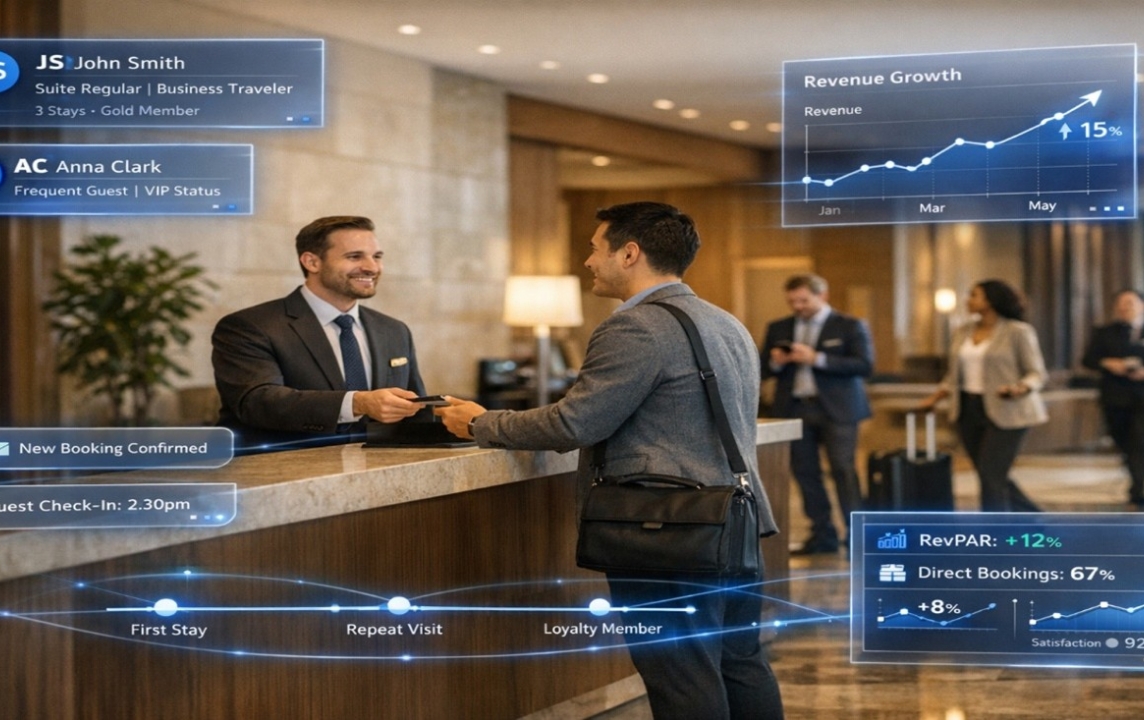
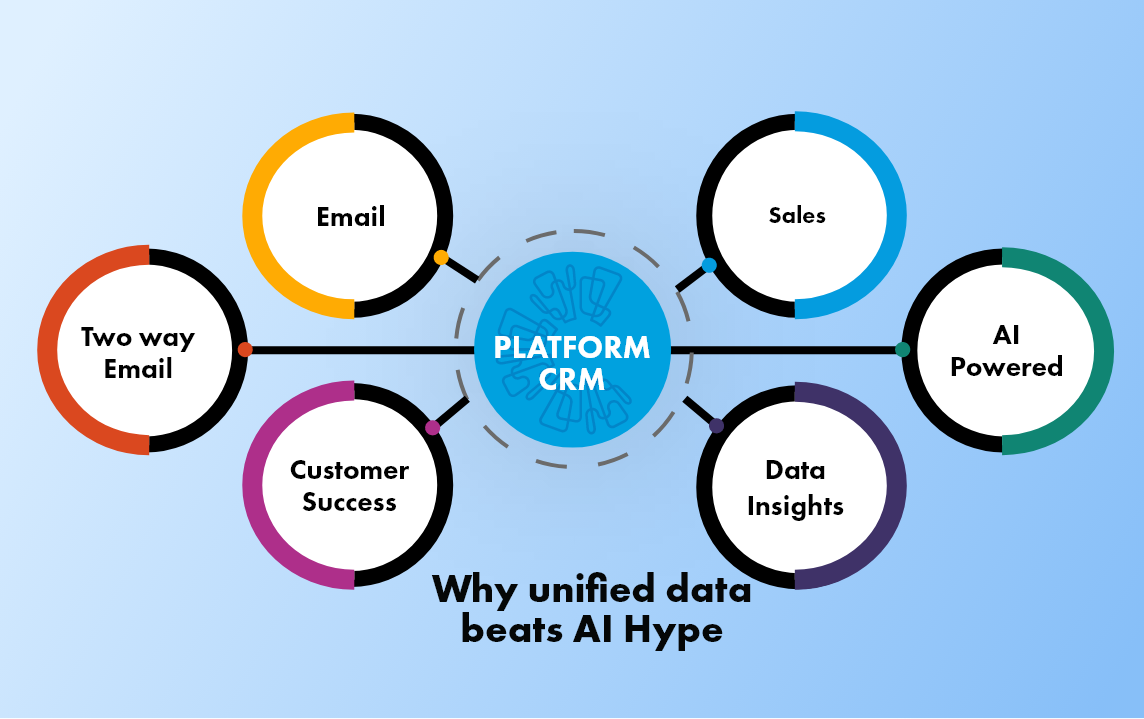
When guest data, sales, marketing and operations operate from a shared, real-time view, everything changes faster decisions, better personalisation, stronger direct relationships, and protected margins.
The winners won't be those with the most AI or the flashiest tech stack. They'll be the ones with aligned teams, trusted data and direct guest relationships built around the end-to-end guest journey, and relevance. That's the rarest competitive advantage in hospitality today. Otherwise, without it, AI will automate complexity, OTA’s will keep out-learning and out-selling hotels, and tech spend will increase while margins quietly erode.
Comparing notes across the hospitality industry
If you’re questioning how disconnected data is impacting OTA performance and direct revenue, we’re always open to a conversation to share the patterns we’re seeing across hotel groups and what’s helping teams reconnect the guest journey.

30 days free trial. No credit card required
 One powerful platform
Simple to use
Comprehensive
One powerful platform
Simple to use
Comprehensive