2026 - The Year Your CRM Strategy Changes
Let us skip the preamble. Email marketing in 2026 is not dying; rather, it is evolving faster than most teams are prepared for. The inbox has become an AI-mediated space, open rates are collapsing as a reliable metric, and one-way broadcast campaigns are officially past their expiration date.
The good news? The teams who adapt will unlock opportunities their competitors will not see coming. For hospitality teams watching OTAs dominate guest relationships, this shift represents your opening.
The death of the open rate and what to track instead
Open rates have been on life support since Apple’s Mail Privacy Protection launched in 2021. By 2025, the metric became meaningless. Average open rates climbed to 43.46%, which sounds impressive, however, the increase is artificial.
Apple’s Mail Privacy Protection automatically loads tracking pixels for emails recipients never actually open. With Apple Mail controlling over 30% of email clients, these phantom ‘opens’ have nothing to do with whether a human saw your message. Marketers are celebrating engagement that has never happened.
Here is what actually matters; click-to-open rates jumped to 6.81% in 2025 from 5.63% in 2024. This tells the real story. When people do open your email, they are more likely to click. Actual human engagement is becoming more concentrated among genuinely interested recipients.
Gmail and other providers now use AI to summarise emails directly in the inbox. Recipients extract your key points without triggering an open. You can have zero ‘opens’ and still drive action.
Open rates are dead, long live click-through rates, conversions and downstream behaviours.
If someone clicked your CTA and converted, that email worked. The open rate no longer tells that story anymore. The winners will focus segmentation strategies around engagement quality (clicks, replies, bookings) rather than phantom opens.
AI is reading your emails
Apple Intelligence, Gmail’s AI summaries and inbox co-pilots are now standard features for millions of users. These AI readers parse email content and surface key information before a human ever sees your email.
Heavy image-led emails are now a liability, If AI cannot extract your message from accessible text, your email becomes invisible to the algorithms sorting inboxes. Design text-first emails with clear hierarchy that AI can parse.
Bi-directional email an opportunity hiding in plain sight
Batch-and-blast campaigns assume email is a one-way megaphone. 85% of marketers increased their AI usage in 2024 and the smartest applications are not about sending more email, they are about creating two-way conversations.
AI-powered email agents can now handle inbound replies at scale, answering product questions, qualifying leads and routing conversations to the right human at the right time. For lean teams, this is game-changingand we're not talking about the chatbots on your website. They are intelligent agents operating in your recipients’ inboxes.
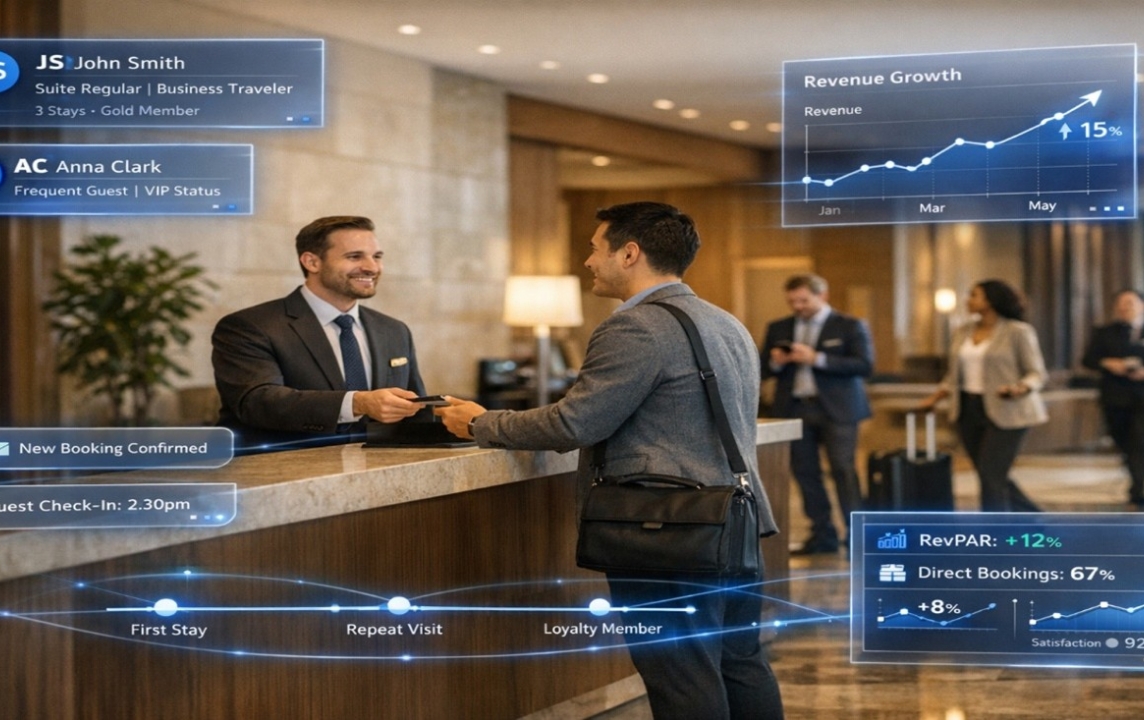
For hotels, this transforms guest communication. A guest replies to your pre-arrival email asking about late checkout? Your AI agent checks availability and confirms instantly. Questions about spa appointments, restaurant reservations, or local recommendations? The system handles them immediately, without tying up your front desk. Whilst OTAs control the booking conversation, you can own the pre-stay and post-stay relationship through intelligent, responsive email.
This shortens customer journeys dramatically. Instead of the traditional email, landing page, form, and waiting for a sales call, you get email, reply, immediate helpful information, and conversion. Automated emails generate 320% more revenue than non-automated campaigns.
Enable reply functionality in your campaigns to deploy actual conversations, not ‘do not reply’ addresses. Marketing and customer success teams are Deploying AI agents that can handle common questions and escalate complex issues to humans. Track engagement beyond opens by measuring replies, response quality and downstream pipeline impact.
Protect deliverability obsessively
One in six emails never reach the inbox, with Gmail’s inbox placement dropping from 89.8% to 87.2% in 2024 following stricter bulk sender requirements.
Inbox providers are using AI-powered filtering and engagement-based scoring, the solution to overcome this is robust segmentation and ruthless list hygiene. By creating sunset flows for inactive subscribers, this will help to increase your baseline delivery rates to around 95% which is is the new gold standard.
Personalisation at scale requires unified data
Personalised campaigns deliver 6x higher transaction rates and boost revenue by 41%. However, data ecosystems are increasingly fragmented. The challenge? Data ecosystems are increasingly fragmented, while customer behaviour spans email, web, bookings and support, yet each channel's data sits isolated whilst privacy regulations restrict tracking capabilities.
The solution, invest in unified data infrastructure and break down the silos between CRM, product analytics and engagement data, then use AI for pattern recognition to identify churn signals and expansion opportunities.
What this means for your CRM Platform
Here’s the uncomfortable truth - AI won’t fix fragmented data. Marketers are being sold AI as the golden goose, however, without unified customer journey visibility, you will be automating chaos. Which starts to become costly in more ways than one. The promise of AI-powered personalisation crashes against the reality of data silos.
47% of CRM users report better access to client data helps improve deliverability but that still leaves more than half struggling with incomplete views. Meanwhile, companies with proper CRM integration achieve a 23% reduction in marketing costs and see £6.45 return for every pound invested. The gap between winners and losers? Platform architecture.
Data silos are the silent killer of 2026 email performance. Email engagement lives in your ESP, purchase history sits in your eCommerce platform, support tickets hide in your help desk and your product usage data lives in analytics. AI can’t personalise what it can’t see and when it can see all of these things the costs start to rapidly spiral out of control. You can’t build cost effective, predictive segments when customer behavior is scattered across seven or eight systems.
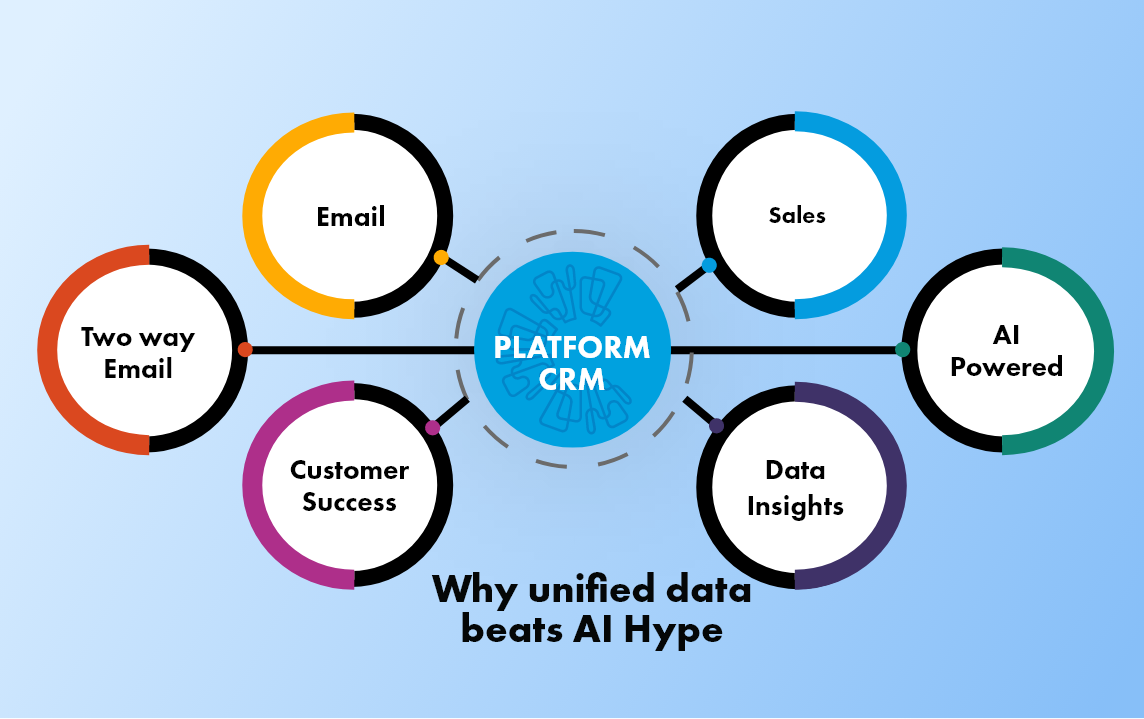
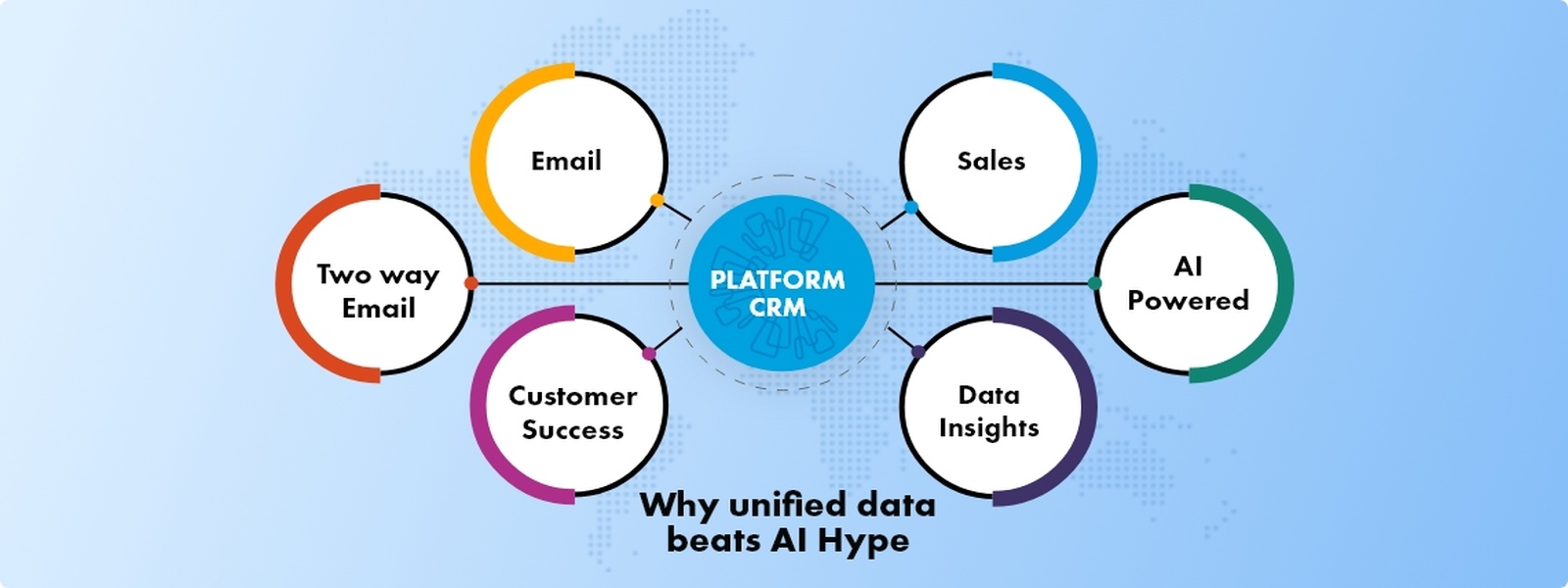
The platform CRM approach solves this by centralising customer data across every customer touchpoint and email channel into a single source of truth. This isn’t just convenient, It’s existential. When your bi-directional AI email agent needs to answer a product question, it needs real-time access to purchase history, support tickets and account status. When you’re building predictive churn models, AI needs to see the complete journey, not fragments.
What winning teams do differently
They unify their data infrastructure, breaking down walls between marketing automation, sales, support and product analytics. Real-time customer profiles that update across all systems simultaneously.
Cross-channel journey mapping, automatically tracks how email engagement connects to website behaviour, support customer interactions and purchase patterns. This provides a complete understanding of every path, not isolated touchpoints.
Once you’ve built a clean, cross-channel data foundation, you unlock what truly matters an AI-ready architecture. Structured, connected and accessible customer data that AI can actually use for segmentation, personalisation, and prediction. Because with AI, garbage in, garbage out isn’t a warning, it's a guarantee.
Single platform visibility. Marketing, sales and service teams viewing the same customer data, in real-time, without manual exports or data reconciliation delays.
The bottom line for CRM teams, "You can’t leverage AI if you don’t have unified data." Before chasing the next AI feature, ask whether your platform actually gives AI the complete customer view it needs to be effective. Data unification isn’t sexy but it’s the prerequisite for everything that is.
What matters in 2026
Email is not dead but the 2025 playbook is.
Winning teams prioritise clicks, conversions and revenue by designing text-first emails that work for both humans and AI. Bi-directional AI conversations don’t just engage, they protect deliverability and unify data across the journey.
The inbox has changed. Your CRM needs to change with it.

30 days free trial. No credit card required
 One powerful platform
Simple to use
Comprehensive
One powerful platform
Simple to use
Comprehensive